
Reviewed · CITY TOURS
Private Full-Day Muscat City Tour
Muscat can feel big, fast, and a bit confusing. This private full-day tour is interesting because it strings together the city’s most meaningful sights in a smart order, from worship spaces to forts, markets, and modern culture.
I especially like how you get both the grand showpieces like the Sultan Qaboos Grand Mosque and the hands-on local flavor of the Mutrah Fish and Vegetable Market. The other big win is that the day is run in a way that feels organized, so you do not waste time figuring things out. One possible drawback is that it is a full 7 to 8 hours, and it is not stroller accessible, so plan for a lot of walking and standing.
Key highlights you will actually care about
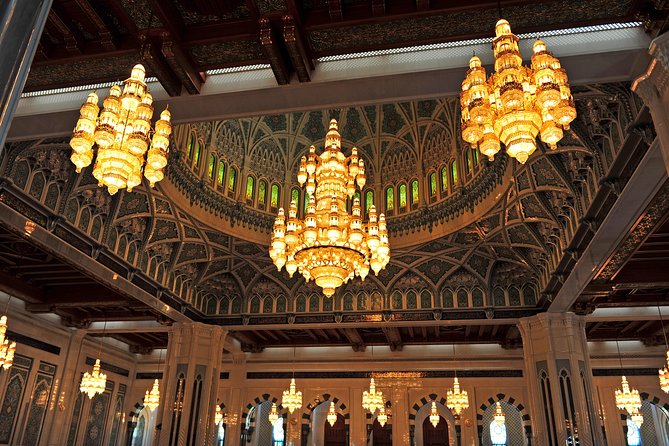
- Grand Mosque details include a massive prayer carpet and a chandelier described as a 14-meter Swarovski Crystal piece
- Mutrah market time shows real daily commerce, with locals buying and selling fresh seafood
- Mutrah Souq history goes back around 200 years and sits by the harbor, shaped by trade routes
- Fort views from Mutrah Fort cover both the city and bay, with Portuguese and Omani layers of history
- Bait Al Zubair Museum focuses on Omani culture, history, and the Royal Family
A private Muscat city day that connects the dots
This tour works because it treats Muscat like a living city, not a checklist. You start in one of the most important spiritual sites in the country, then shift to neighborhood life in Mutrah, then end with official Muscat culture at the Royal Opera House.
You get a smooth city rhythm: driving breaks, photo stops, and museum time that does not drag. And because it is private, the pace can feel more natural than on a crowded group bus.
Pickup at 8:30 and the route that protects your time
The day starts at 8:30 am and runs about 7 to 8 hours. Pickup is offered, which matters here because Muscat sites are spread out and you want to arrive without the stress of transfers.
The route also uses driving time well. On the way to Mutrah, you pass through areas with ministries and embassies and you also go along Al Qurum with a mention of a “Marvelous Beach Street” vibe. That is a nice way to get a sense of the city outside the main sights, without adding extra stops.
More City Tours in Muscat
- Muscat: Budget Friendly City Tour
★ 4.8 · 321 reviews - Half-Day Private Muscat City Tour – Top Landmarks in Just 4 Hours
★ 5.0 · 256 reviews - Oman: Private Muscat City Tour With Pick-up/ Drop-off
★ 4.4 · 234 reviews
Entering the Sultan Qaboos Grand Mosque, from 416,000 m² to the chandelier
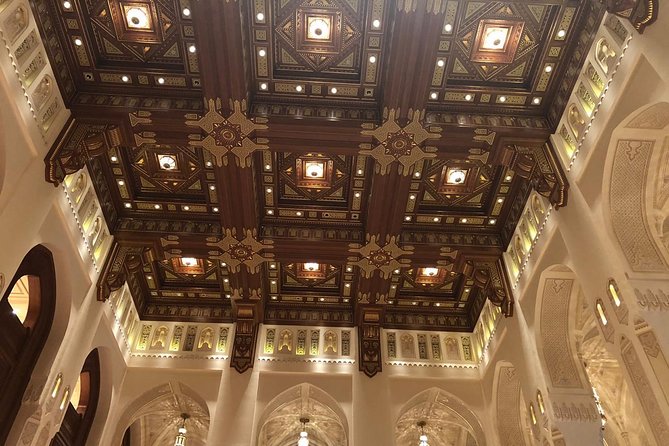
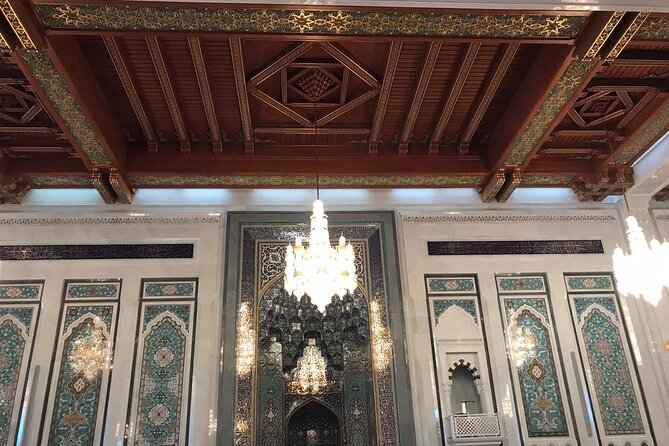
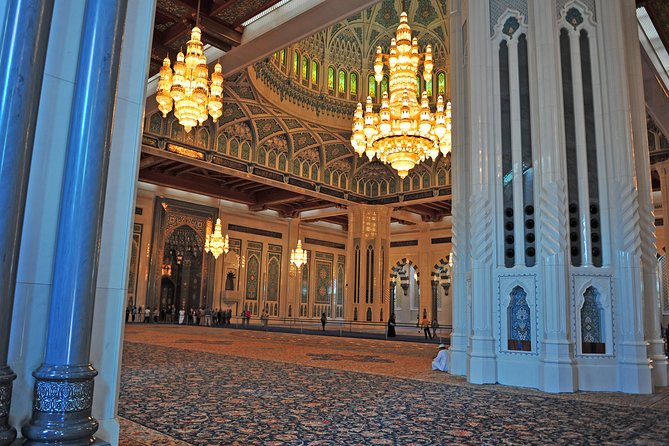
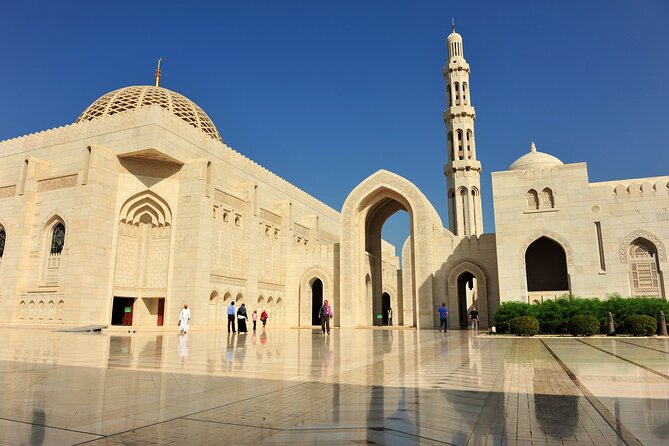
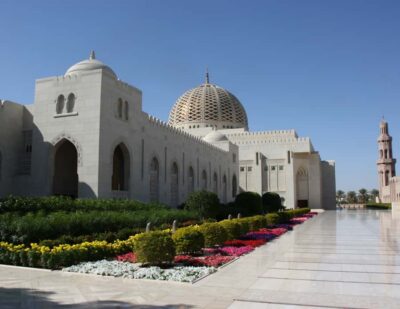
The Grand Mosque is the kind of place where scale hits you before details do. It sits on a site covering 416,000 m², and the overall complex spans 40,000 m². It was inaugurated on May 4, 2001, and five minarets frame the premises, with the tallest minaret reaching 90 meters.
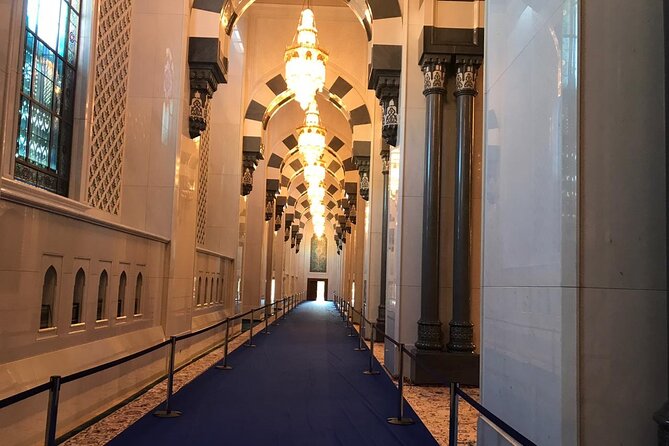
Inside, the prayer hall is square at 74.4 by 74.4 meters, and the central dome rises to 50 meters above the floor. The main prayer room can hold over 6,500 worshippers, so the space is made for gatherings, not just viewing.
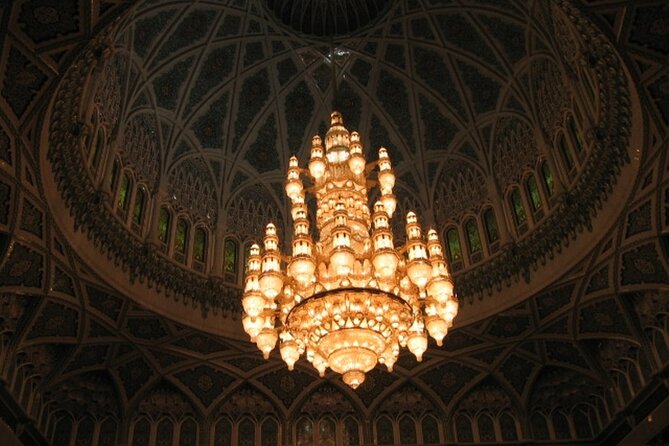
What I find most memorable is the way the interior is described as a full design world. The tour highlights the prayer carpet as the major design element, listed as 21 tons and 28 colors. There is also a chandelier described as 14 meters long featuring Swarovski Crystal. Even if you are not the type to geek out on architecture, those numbers help you understand why people call it spectacular.
Practical note: come prepared for mosque etiquette and dress requirements. The tour lists the Grand Mosque with free admission, but it does not remove the need for respect, which is part of the experience here.
Al Qurum Beach drive and Mutrah Fish and Vegetable Market
After the mosque, you head toward Mutrah and stop at the Mutrah Fish and Vegetable Market. The ride itself is part of the feel of the day. You drive through the ministries and embassies area and through Al Qurum, so you see Muscat’s “in-between” parts rather than only the tourist core.
The market stop is short, about 20 minutes, and it is designed to let you take in daily life without turning it into a long detour. The focus is clear: you see locals buying and selling fresh fish and seafood and also get a quick look at vegetables alongside the seafood trade.
Because this is a working market, it helps to keep expectations realistic. You are not there for a polished showroom. You are there to witness how people feed the city, literally fresh off the harbor.
Mutrah Souq, Oman’s largest traditional market by the harbor
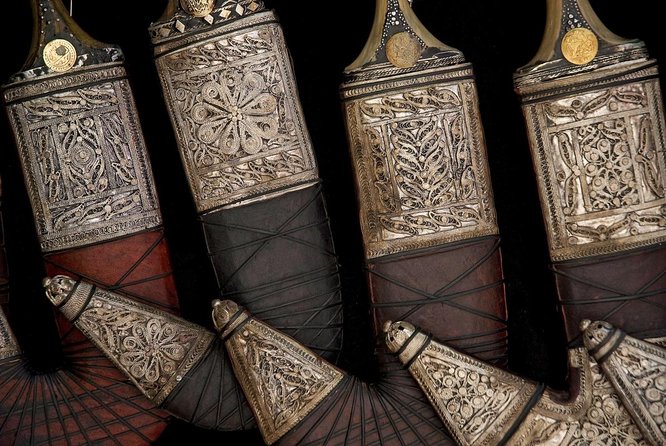
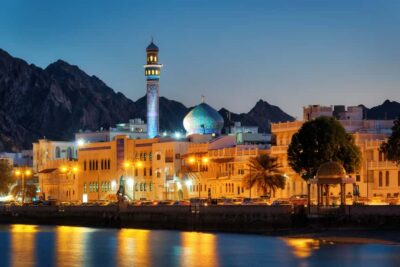
Next you visit Mutrah Souq, described as Oman’s largest traditional souq and one of the oldest marketplaces in Oman, dating back about 200 years. It sits adjacent to the harbor of Muscat, and the souq’s old importance is tied to trade routes, including the age of sail connections toward India and China.
The tour also includes a particularly memorable detail about why the souq is said to be named in connection with darkness. The stalls and lanes are crowded in a way that sunlight does not infiltrate much during the day, and shoppers may need lamps to find their way. That gives you a strong mental picture before you even arrive.
You will have about 1 hour here. That is enough time to walk, compare, and pick up a few things if you want souvenirs, without feeling rushed.
A tip I recommend: go in with one or two “shopping targets,” not ten. Mutrah is the kind of place where you can end up buying three things you did not plan, because it is easy to get distracted by color, crafts, and everyday bustle.
A few more Muscat days worth weighing up
- From Muscat: Wadi Shab & Bimmah Sinkhole Full-Day Tour
★ 4.8 · 1,862 reviews - Wadi Shab and Bimmah Sinkhole Group Full Day Tour
★ 5.0 · 303 reviews - Full-Day Private Wahiba Sands Desert and Wadi Bani Khalid Tour
★ 5.0 · 291 reviews - Nizwa Fort-Nizwa Souq-Misfah Al Arbyeen-Jebel Shams – Private Full Day Tour
★ 5.0 · 220 reviews
Mutrah Fort and Bait Al Zubair Museum: stone, then stories
From the souq, you move to Mutrah Fort, a 30-minute stop with admission included. The fort sits on a mountain ridge and overlooks both the city and bay of Mutrah, which is exactly what you want from a defensive site.
The tour’s history timeline helps you read the structure:
- It is said to have been built around 1507
- The Portuguese later added towers and a curtain wall in the late 18th century
- Under the Al Busaidi dynasty, the curtain walls were doubled and more towers added
- It was restored by the Ministry of Heritage and Culture in 1980
This makes Mutrah Fort more than a view. It is a physical record of who guarded Muscat and how priorities shifted over time.
Then you go to Bait Al Zubair Museum for another 30 minutes, with admission included. This stop is different in feel. Instead of outdoor fortifications and sea views, the museum focuses on Omani culture and history, and it also includes information about the Royal Family.
If you only visit one “context” stop besides the mosque, I would pick the museum. The fort gives you a sense of defense and location, but the museum helps you understand the people and the story behind the city you are walking through.
Al Alam Palace gates and the photo-only Jalali and Mirani forts
After the museum, you head toward Al Alam Palace in old Muscat. The tour notes the palace has a history of over 200 years, built under the watch of Imam Sultan bin Ahmed, described as the 7th direct great-grandfather of Sultan Haitham. The existing palace was rebuilt as a royal residence in 1972 and has a facade described as gold and blue.
Here is the key visitor detail: public access is near the gates. The inner palace grounds remain off-limits, but you can stop close to the entrance area and take photographs. The palace is used for official functions and receives distinguished visitors, so it is not a casual photo stop like a monument in a park.
A few minutes later, you also see the Jalali and Mirani Forts. The tour is explicit: this stop is just for pictures, and the forts are not open for visitors. These are Portuguese-built forts said to have been built in 1580 under Philip I of Portugal, on an earlier Omani fortress. They were intended to protect the harbor after Muscat had twice been sacked by Ottoman forces. Later, Omani forces took them in 1650, and the forts changed hands again during civil wars between 1718 and 1747.
Even if you cannot go inside, the viewpoint near Al Alam Palace and the harbor context help you connect the dots between royal authority and coastal defense.
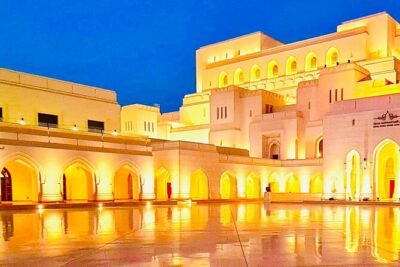
The Royal Opera House, contemporary Omani architecture with a 2011 opening
You finish at Royal Opera House. The tour frames it through Oman’s cultural modern side, linked to His Majesty Sultan Qaboos bin Said Al Said Al Said, described as a long-time fan of classical music and the arts.
The building order is also part of the story. The tour says the Sultan ordered the building in 2001, and the opera house was officially opened on October 12, 2011. It is designed with contemporary Omani architecture, and it can accommodate up to 1,100** people.
This is also not just one room. The complex includes a concert theater and an auditorium, plus formal landscaped gardens, a cultural market with retail, luxury restaurants, and an art center for musical, theatrical, and operatic productions.
If you are the type who thinks Muscat is only mosques and forts, this stop is a satisfying correction. It shows the country investing in the arts, with a building that looks like it belongs in Oman rather than in imitation of somewhere else.
Price and value for a $259 private full-day plan
The price is $259 per person, and the duration is about 7 to 8 hours. That might sound high until you factor in what you get: a private format, pickup offered, multiple major stops, and admissions included for the Fort, Bait Al Zubair Museum, and the Royal Opera House.
The value improves if your group is compact and you want efficiency. You are not paying extra for multiple separate tickets and you are not spending hours coordinating transit between parts of Muscat that do not sit next to each other.
Also, this plan hits two categories of experiences. It mixes big landmark time with local market time. That blend is hard to do well on your own in a single day.
If you are cost-only focused, you can travel cheaper by arranging separate taxi rides and picking a couple of sites. But if you want a full day that feels managed, this private structure makes sense for the price.
Who this Muscat tour suits best, and who should think twice
This tour fits best if you want a one-day orientation to Muscat that still includes meaningful culture, not just photos. It also suits you if you like a plan that is run professionally and organized, with a guide who keeps the day moving smoothly.
You should think twice if you hate long standing and walking. It is not stroller accessible, and several stops involve moving between viewpoints and interior spaces, even with short visit windows.
If you are visiting for the first time and want to see the main anchors, it is a strong choice. If you already know Mutrah well and just want one museum, you may feel it is too much in one day.
Should you book this full-day Muscat city tour?
I would book this if your goal is to see the Grand Mosque, experience Mutrah markets, understand the Royal and cultural side of Muscat at Al Alam Palace and the Royal Opera House, and do it with minimal stress. The strongest part of the experience is the way it blends big-ticket sights with real local market life, while still keeping the day organized.
I would also book it if you want admissions handled for the major culture stops, since the plan includes ticketed entry for Mutrah Fort, Bait Al Zubair Museum, and the Royal Opera House, while other key areas are listed as free.
If you are traveling with limited mobility or you need stroller access, you will likely want a different format, because the tour is explicitly not stroller accessible.
FAQ
What time does the Muscat city tour start?
The start time is 8:30 am.
How long is the full-day tour?
It lasts about 7 to 8 hours.
Is this tour private?
Yes. It is a private tour/activity, and only your group participates.
Is pickup included?
Pickup is offered.
Which key sights are included?
You will visit the Grand Mosque, Al Qurum Beach area, Mutrah Fish and Vegetable Market, Mutrah Souq, Mutrah Fort, Bait Al Zubair Museum, Al Alam Palace, and the Royal Opera House. The Jalali and Mirani Forts are included for pictures only (not for entry).
Are admission tickets included?
Admission is listed as free for the Grand Mosque, Mutrah Fish and Vegetable Market, Mutrah Souq, and Al Alam Palace, and the Jalali and Mirani Forts are photo stops. Admission is listed as included for Mutrah Fort, Bait Al Zubair Museum, and the Royal Opera House.
Is the tour stroller accessible?
No, it is listed as not stroller accessible.
Do I get a mobile ticket, and can I cancel if weather is bad?
You get a mobile ticket. You can cancel for a full refund if you cancel up to 24 hours in advance. The experience requires good weather, and if it is canceled due to poor weather, you are offered a different date or a full refund.
If you want, tell me your travel dates and group size, and I can suggest the best order to prioritize if you care most about markets, forts, or architecture.
Newest out of Muscat
- Wahiba Sands and Desert Safari from Muscat★ 5.0 · 3 reviews
- Guided Private Tour to Wakan Village in Oman★ 5.0 · 3 reviews
- Sunset And Coastal Trip Muscat★ 5.0 · 3 reviews
- Muscat Tour : Explore Evening Muscat attractions★ 5.0 · 3 reviews
- Muscat: Daymaniat Snorkeling Tour with Pick up & Drop off★ 4.7 · 3 reviews
- Wadi Shab full day tour (Muscat tours):Oman Shore excursions★ 4.5 · 3 reviews
- Muscat : Private trip to Wadi Shab for a full day with lunch★ 5.0 · 4 reviews
- Full-Day Private Wadi Tiwi Adventure★ 5.0 · 4 reviews
City Tours, compared.
Half-Day Private Muscat City Tour – Top Landmarks in Just 4 Hours
Read our review →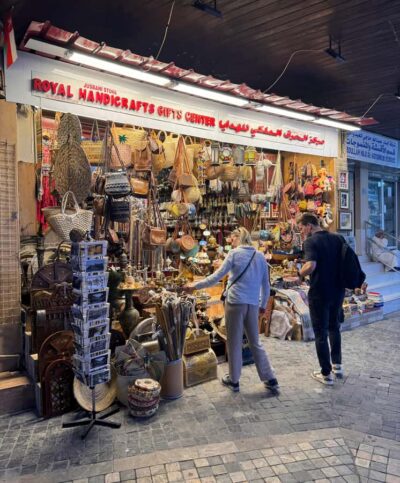
Private Muscat City Tour With Pick-up/ Drop-off
Read our review →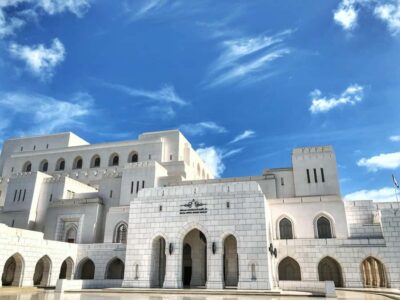

4 hours private Tour of Muscat City with Pick-up
Read our review →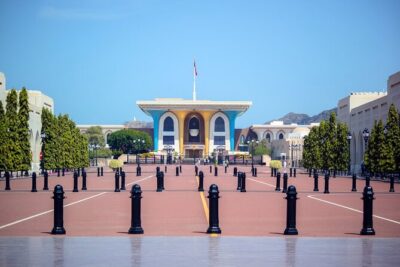
Half-Day Private Muscat City Tour- with a local guide
Read our review →Browse the lists this tour appears in