
Reviewed · FULL-DAY TOURS IN SALALAH
Enjoy a Full-Day Tour Uncovering East Salalah’s Hidden Gems
East Salalah is the kind of day that makes your brain switch modes over and over, sea cliffs to mountain valleys in one smooth loop. I like that this tour lines up those big contrasts in a logical order, and the day often runs smoothly with guides such as Hamid or Hafez who are known for clear explanations and a calm, early start.
What I like most is the mix of wow-factor nature stops and real cultural context. You’ll love the Wadi Darbat cascades and cool valley vibe, then finish with the rare baobab trees in Hinna Valley, the kind of sight that makes you stop and stare like, wait, how did this get here?
The one drawback to plan around is that a few stops involve walking and climbing stairs, and the whole day runs about 6 to 8 hours, so you’ll want decent shoes and a little patience for gentle uphill bits.
Key highlights at a glance
- Taqah seaside to castle history: beach palms, old mud houses, and the former home of the Wali, now a historical center
- Wadi Darbat in spring/khareef season: waterfalls, a lively valley feel, and often-sighted herds
- Tawi Attair sinkhole, locally the well of birds: karst limestone, big depth, and bird activity around the opening
- Gravity Point experience: a natural mystery you can see by testing the car in neutral
- Hinna Valley baobabs: Dhofar’s rare giant Tabaldi baobabs, with local names you can hear from your guide
- Sumhuram UNESCO ruins: ancient frankincense-port history above the Indian Ocean
From Taqah Beach to Sumhuram: Why East Salalah Works So Well
East Salalah Province feels spread out, but this tour turns distance into a story. You start with coastline scenes, move into “green season” valley energy at Wadi Darbat, then head up to karst formations, roadside curiosities, and finally an ancient city site high above the ocean. It’s a rare way to see the region in one go without you needing to plan or drive yourself.
The best part for me is the pacing. The stops are short enough to keep your energy, but long enough that each one lands. You’ll also get a real sense of Dhofar life, not just scenery. Your guide explains what you’re looking at, from settlement patterns around Taqah to why Sumhuram mattered for the frankincense trade.
One more practical note. This experience is weather sensitive. If conditions are poor, the tour can be moved to another date or refunded, so it helps to plan your Salalah days with some flexibility.
More Full-Day Tours in Salalah
- Full Day Guided Salalah a Combination of East and West tour
★ 5.0 · 20 reviews - Explore West Salalah’s Stunning Natural Scenery – a Full-Day Tour
★ 5.0 · 20 reviews - Desert Safari Trip Full Day & Ubar Lost city
★ 5.0 · 18 reviews
Price and value: what $207 per person really covers
At $207 per person, this is not a budget “bus tour” kind of price, but it also isn’t paying for only one or two attractions. You’re paying for a full-day route, with transportation, guidance, and admission fees already included. The cost makes more sense when you think about how scattered these sites are: to hit Taqah, multiple valleys and natural points, plus Sumhuram in one day, you either need a driver or serious local know-how.
What helps the value feel fair:
- All sites admission fees are included
- Bottled water and an air-conditioned vehicle
- A local Arabic/English speaking guide
- Pickup offered
- A private setup where only your group participates
If you’re traveling in a small group, it can feel especially worth it because you get personal attention without the “tour herding” vibe.
Getting there: pickup, air-con, and the 2WD versus 4WD detail
Your day is built around a driver and vehicle, so you start the tour without worrying about routes or parking. Pickup is offered, and the tour uses air-conditioned transport, which matters in Salalah because you can go from cool valley time to brighter roadside sun pretty fast.
Vehicle type depends on group size. The tour notes:
- 2WD for groups of 1 to 3 adults
- 4WD for 4 to 6 adults
- For 7 to 9 adults, it uses two 4WD cars with one guide and two drivers
That tells me they expect some roads or viewpoints where traction and clearance matter. It’s also a good hint about the overall style of the day: this isn’t just city strolling.
Stop 1: Taqah Beach palms, sea air, and that first “Dhofar wow”
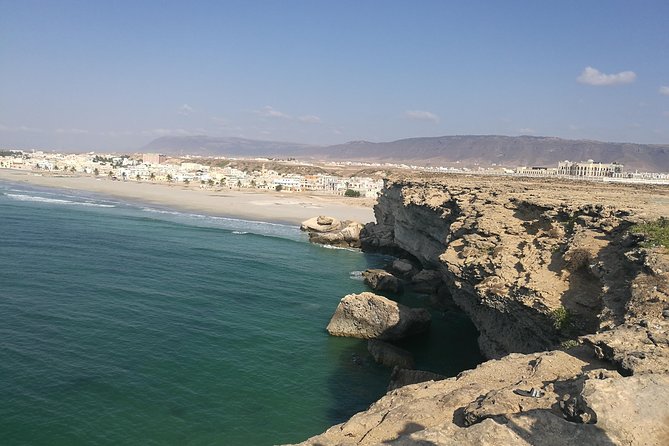
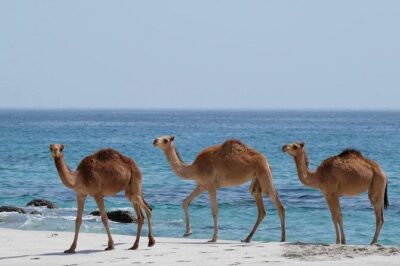
Taqah Beach is a quick opening act, about 15 minutes, and it’s the right choice because it sets the mood immediately. Expect sandy shoreline scenery with tall palm trees along the coast and moderate waves. You may also see dolphins offshore, so if you’re the type who likes a bit of nature luck, this is a pleasant place to start.
One reason this stop is more than just a photo break: Taqah gives you a feel for the coastal rhythm of the region. The later stops cover valleys and limestone, but the coastline reminds you why these communities and trade routes existed in the first place.
Since the stop is short and free, I’d treat it like this: take your photos, look around, and then be ready to move on. Don’t waste time changing outfits or you’ll feel rushed later.
A few more Salalah days worth weighing up
- Full-Day Private Salalah West Tour with Lunch
★ 5.0 · 12 reviews - East and West Salalah Combination Private Full-day Tour
★ 5.0 · 11 reviews - East Salalah tour Full day (private tour)
★ 5.0 · 8 reviews - Private Full-Day East Oman Tour from Salalah with Lunch
★ 5.0 · 7 reviews
Stop 2: Taqah Castle, old mud houses, and a maintenance detour
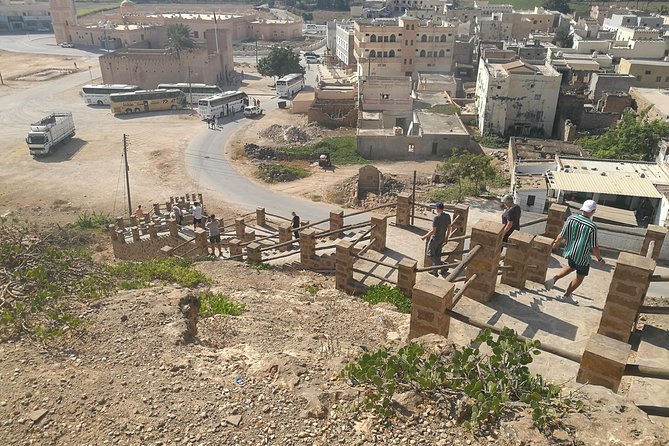
After the beach, you drive into Taqah town through local plantation farms. The highlight here is Taqah Castle, about 1 hour, with admission included.
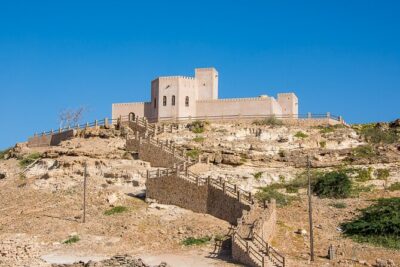
This is tied to Dhofar’s governance era. Your stop includes the former home of the Wali (governor), and today it’s used as a historical center with displays. It’s also connected to the town’s reputation for dried sardines and rural farming life, so you’re not just looking at walls. You’re seeing how people made a living here.
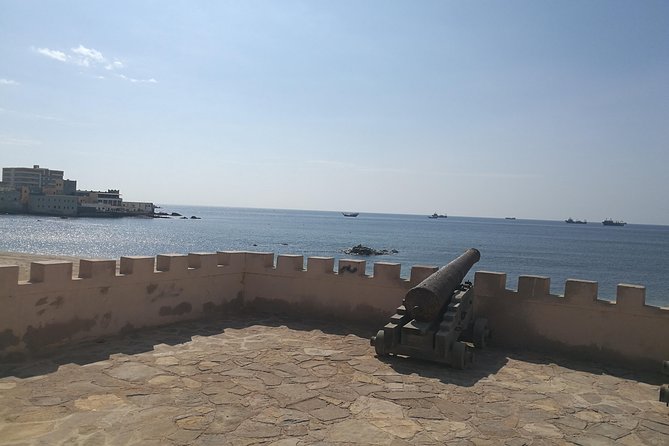
There is one important operational note. The Taqah Castle site is currently under maintenance. In that case, the tour offers extra time at the nearby Taqah Cliff view point instead. So you still get a strong scenic and cultural payoff, but the exact “castle time” can shift.
Stop 3: Taqah Viewpoint Cliff photos with Indian Ocean drama
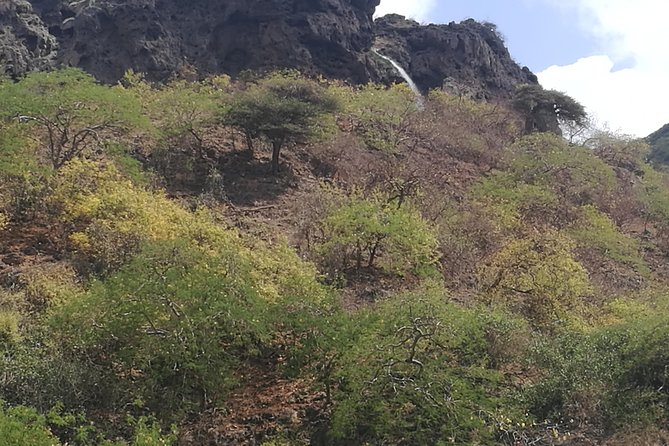
The Taqah Viewpoint Cliff stop is around 15 minutes and it’s free. Even if you never visit the castle in full, this viewpoint still delivers the core sensation of the day: Indian Ocean meeting rugged cliffs.
This is a simple stop, but it’s also a helpful reset. You can grab quick photos, stand back from the edge line, and get your bearings for what comes next. The scenery here also makes the rest of the route feel “earned.” When you later reach the gravity point or sinkhole, you’ll understand you’re traveling across landscapes that are very different from each other.
Stop 4: Wadi Darbat waterfalls, cool valley air, and watching herds
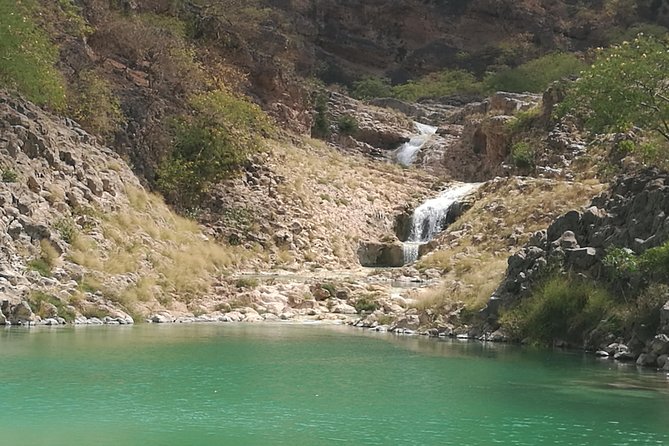
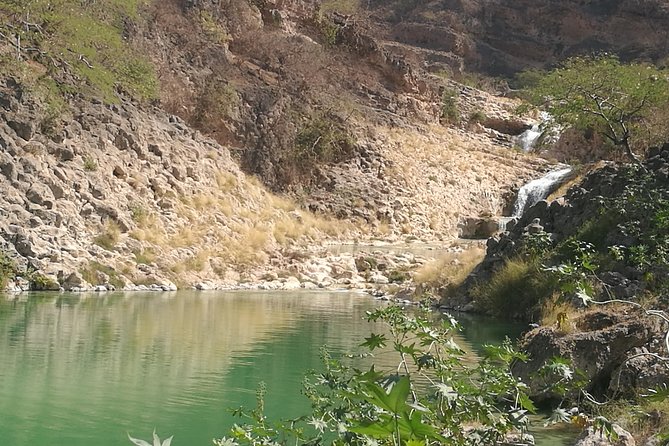
Next comes Wadi Darbat, about 1 hour, and it’s one of the big nature highlights of the region. This valley is famous for spring water that forms a lake through underground flow. In the right season, you may see water activity like pedal kayaking, speedboats, or kayak pontoons, but the key point is the valley’s energy: flowing water, small falls, and a climate that feels like a breath of air compared to the coast.
You might also see herds around, including camels, caws, and goats. That matters because it turns the valley from a “pretty place” into a living landscape.
A practical thing. Wadi Darbat can be slippery in the wrong spots. I’d keep your footing slow and let your guide handle the best viewing paths. If the weather is good, this is also one of the stops where you’ll feel like you can relax, not just sightsee.
Stop 5: Tawi Attair sinkhole, the well of birds, and limestone depth
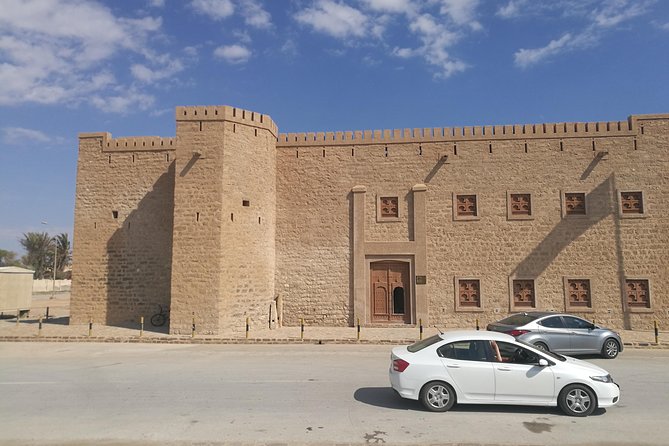
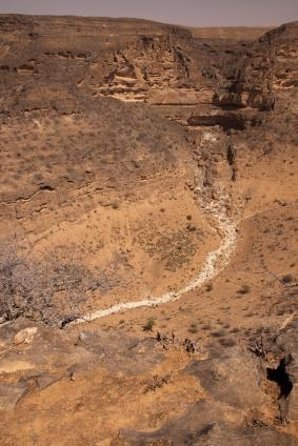
Then you drive around 20 minutes up from Darbat valley into countryside near Jaballi settlement. The stop is the Tawi Attair sinkhole, locally known as the well of birds.
This is not a long stop, about 30 minutes, but it’s very memorable. The sinkhole is described as a karst limestone formation about 211 m deep. That’s big enough to make your sense of scale feel slightly off, the way tall buildings do in a city.
Your guide will explain what’s happening, then take you to a viewpoint spot where you can notice birds circling and calling around the opening. The idea is that lots of nesting occurs on the limestone walls, so the sinkhole becomes a natural hub.
Bring your camera, but also bring your patience. This is the kind of stop where the best moments come from waiting a minute, not sprinting for the best angle.
Stop 6: Gravity Point, neutral gear, and a natural mystery you can try
The Gravity Point is short, about 25 minutes, and it’s one of those stops that makes you feel like you’re participating in a science demo. You head roughly 15 minutes down from the Samhan mountain area.
Here’s the basic phenomenon as your guide explains it: on a certain stretch of road, you put your car in neutral, and the vehicle appears to move uphill. That defies what we usually expect from gravity and the road slope.
Is it perfectly smooth, always the same, and always mind-blowing? The tour frames it as a natural mystery you can experience yourself. So I’d treat it like this: it might be the most talked-about stop, but it depends on the exact conditions on the road. Still, even when it feels subtle, it’s a fun moment of “try it and see.”
Stop 7: Hinna Valley baobabs, Tabaldi giants, and why Dhofar has them
Now we move into the Hinna Valley area at Samhan mountain for the baobab tree forest, about 30 minutes. These are the rare Tabaldi Baobab trees (scientifically dansonia digitata). Your guide may also use local names like Ankiji or Al Mashwa.
Dhofar has about 200 baobab trees, and the tour notes they can reach up to 25 m tall with diameters up to 2 m. You’ll hear how these trees are usually associated with Africa, often with Madagascar, so seeing them in Oman feels like a geography plot twist.
This stop is great for photos, yes, but the best value is the context. Your guide can explain why these trees matter and what makes this local habitat special. Even if you’re not a plant person, it’s hard not to feel impressed by something this large and old.
This is also one of those stops where you should slow down. Look at trunk shapes, imagine how wide the canopy must be, then walk around where you’re allowed for different angles.
Stop 8: Sumhuram old city UNESCO ruins, frankincense trade from above
Your final stop is Sumhuram, an ancient UNESCO site, about 30 minutes. It sits on a small hill overlooking the Indian Ocean, so you’ll get that “ancient place with a view” feeling right away.
Sumhuram is described as an important port for the Dhofari frankincense trade, with history reaching back to a few centuries BC. The ruins you’ll see are the preserved remains of the ancient city. There’s an information center with a 6-minute clip that gives a framing for what you’re looking at.
This is where the day’s theme clicks. The sea stops make sense. The valley water makes sense. The trade history makes sense. Sumhuram ties it all together into one reason people cared about this coast over and over again.
I’d spend your time like this: first look out over the ocean to understand the setting, then watch the short clip, then circle back to the ruins with that new context.
Comfort, timing, and how to avoid a tired day
This is a 6 to 8 hour day, and it’s packed with locations, not long stays. That’s great for seeing more, but it means you should travel prepared.
Here’s what I’d do:
- Wear comfortable shoes because some stops require slight walking and climbing stairs
- Bring sun protection. You’ll be outdoors at coastline, viewpoints, and hilltop ruins
- Keep a light day bag. You don’t want to wrestle with it every time you park
- Stay open to flexibility. If a site like Taqah Castle is under maintenance, the tour replaces time with a viewpoint instead
One of the recurring praises in this kind of tour setup is how smoothly it runs when the guide helps you handle the paths, especially if your group includes kids. Having a guide who’s patient and pays attention to who needs extra care can turn “a tough path” into a doable one without drama.
Who should book this East Salalah route
This tour fits best if you want a full-day mix of nature and culture, without doing logistics. It’s especially strong for:
- First-time visitors who want a “sea-to-mountains” overview of East Salalah
- Families who like varied stops, including Wadi Darbat’s valley feel
- Travelers who want rare sights, like the baobab trees, plus a classic historical ending at Sumhuram
- Photo lovers who enjoy quick viewpoint breaks and then moving on
If your idea of a perfect day is slow and lazy with minimal driving, you might find the pace a bit busy. But if you like variety and clean organization, this route is a good fit.
Should you book this tour or choose something else?
If you want one day that connects Taqah’s coastline and heritage, Dhofar’s valley water at Wadi Darbat, natural weirdness at Tawi Attair and Gravity Point, and then a proper historical finish at Sumhuram, I think this is a smart booking. The price feels more reasonable when you factor in admissions, guide time, private-group transportation, and the fact that you are covering a lot of ground without doing the driving.
I’d book it if you’re traveling with a group that values comfort, because the tour uses air-conditioned transport and private vehicles sized to your party. Guides such as Hamid and Hafez are repeatedly praised for early pickup, good English, flexibility with timing, and care for the group, including help on harder paths.
I’d skip or rethink if you have limited mobility due to stairs and walking, or if you hate weather-dependent outdoor stops. Also, because it runs up to 8 hours, it’s best when you’re not racing a tight schedule.
FAQ
How long is the East Salalah full-day tour?
It runs about 6 to 8 hours.
Is pickup included?
Pickup is offered.
What is the price per person?
The price is $207.00 per person.
What sites will we visit?
You’ll visit Taqah Beach, Taqah Castle, a Taqah viewpoint cliff, Wadi Darbat, Tawi Attair sinkhole, Gravity Point, Hinna Valley baobab trees, and Sumhuram old city.
Are admission fees included?
Yes. All sites admission fees are included.
What kind of vehicle will be used?
The tour uses an air-conditioned vehicle. It specifies 2WD for 1 to 3 adults and 4WD for 4 to 6 adults. For 7 to 9 adults, it uses two 4WD cars with one guide and two drivers.
Is this a shared tour with other groups?
No. It is private, so only your group participates.
Is it physically demanding?
Most travelers can participate, but some stops require slight walking and climbing stairs.
Is weather important?
Yes. The experience requires good weather. If it is canceled due to poor weather, you will be offered a different date or a full refund.
What is the cancellation cutoff for a full refund?
You can cancel up to 24 hours in advance for a full refund.
Newest out of Salalah
- Half day Salalah City Tour with Souq Visit★ 5.0 · 3 reviews
- Half-Day Private Salalah East Tour★ 5.0 · 3 reviews
- Salalah East Tour (Full Day Tour)★ 5.0 · 3 reviews
- Jebel Safari – Tour della montagna★ 5.0 · 3 reviews
- Empty Quarter & Lost City from Salalah★ 5.0 · 3 reviews
- Salalah City Tour :Salalah Tours★ 5.0 · 3 reviews
- West Coast Mountains and Beaches (Fazayah beach + Shaat cliff)★ 5.0 · 3 reviews
- Desert Safari in Empty Quarter with Dune Bashing★ 5.0 · 4 reviews
Full-Day Tours in Salalah, compared.
Full Day Guided Salalah a Combination of East and West tour
Read our review →
Explore West Salalah’s Stunning Natural Scenery – a Full-Day Tour
Read our review →

East and West Salalah Combination Private Full-day Tour
Read our review →
Private Full-Day East Oman Tour from Salalah with Lunch
Read our review →
Browse the lists this tour appears in